How can justice processes for sexual assault survivors be trauma-informed?
Women were a driving force behind last week's election results, according to some political observers.
The advocacy of sexual assault survivors has put issues around how they're treated into the political spotlight.
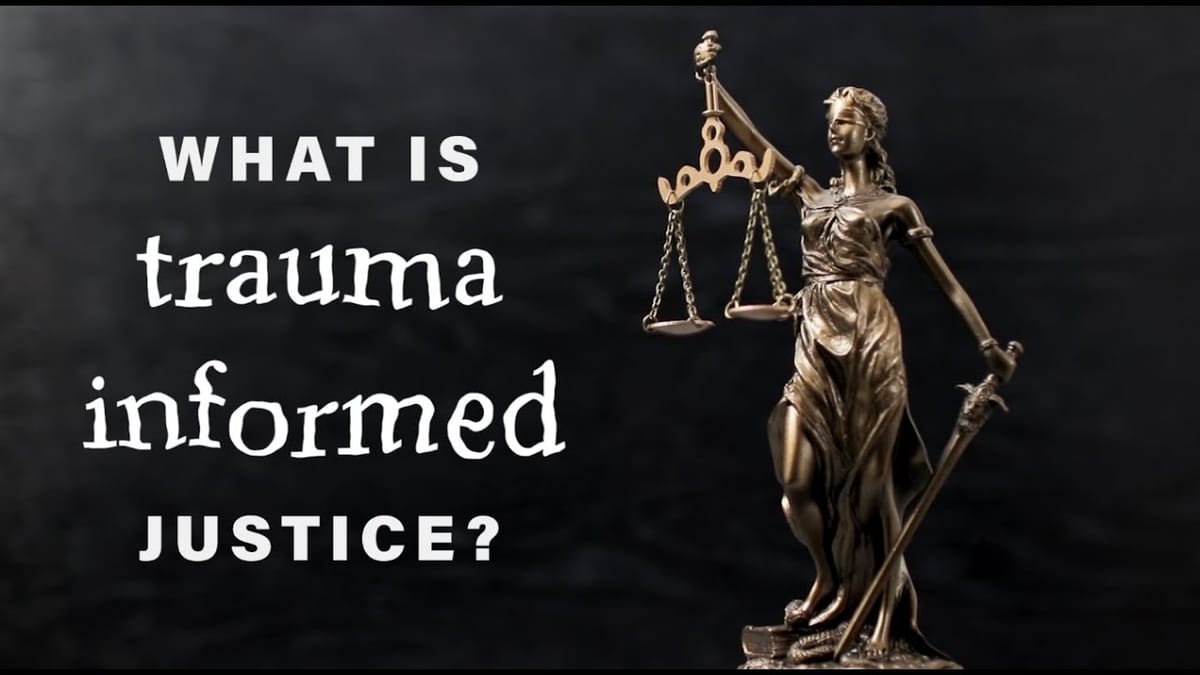
And over the last year, there's been two words we're hearing more often: trauma informed.
"We just spent a lot of time learning about how trauma impacts the brain and behavior, and what trauma informed care actually looks like," says Ashleigh Rae Cooper.
She's one of the survivors and advocates who worked on the #LetUsSpeak campaign. After her attacker was convicted in 2020, Cooper began studying trauma as part of a social work degree.
"It made so much more sense," says Cooper. "Oh my God."
"I picked up quite a bit of this knowledge over the years because I went looking for it, because I was trying to understand what I was going through. But I really struggled to find information about trauma."
Cooper thinks part of this inaccessibility is due to gatekeeping. "I think the medical profession keeps a lot of that on the down low and there are very good reasons for that."
"But it also means that there's not lots out there for people seeking to understand what is happening for them."
'Trauma informed' is a new phrase for many, who may not have been aware of it before last year. It's also new to academia.
"This is a very recent addition to the social work curriculum," says Cooper. "It's a wonderful addition to the social work repertoire."
But what does it mean?
"There are key principles of trauma informed care," Cooper explains. "So it's engendering trust and safety. Safety is a very big thing."
Appropriate care also requires understanding of trauma's impact. "Understanding how the brain works when it goes into trauma - so the physiological aspect of it."
"When someone is triggered or experiencing trauma, you cannot talk to them rationally or logically because they are operating out of instinct, survival instinct."
That's something Cooper is personally familiar with, after she was told her attacker would be removed from the sex offenders registry.
"I got a call from a special unit within Victoria Police," Cooper recalls. "They wanted to ask for my input. I was so shocked that I hung up the phone and I saw what across the room and smashed it into a wall. And I screamed and shouted and had a big PTSD attack. That was not fun."
"Eventually I got back in touch with them and they had to re explain it to me about three or four times because I couldn't process what they were trying to tell me."
In those cases, trauma informed care means giving survivors control.
"It's about how to help them reengage with the logic part of their brain," explains Cooper. "That means that they can actually have a chat with you. They can take more control over what's going on with them."
Cooper feels she had a little control during her court case. "I was acutely aware that at any point a reporter could walk into the room, sit down and start taking notes, and I would have no control over that."
It's a concern illustrated by the Courier Mail's coverage of the disclosure by Queensland MP Melissa McMahon, who criticized the paper on Twitter.
The balance between openness and privacy is a fine needle to thread. "You don't want to have a closed off court trial necessarily, because that's when things like corruption and bad behaviors and stuff can happen," Cooper says.
"But at the same time you're dealing with sexual assault. That's incredibly personal. It's not trauma informed, it's trauma amplifying."
So how can our system support survivors in a trauma informed way?
Cooper has some tips. "Being very supportive, holding no judgment, having hope and seeing them as a whole person, knowing that they can get through it."
"They just need a little bit of support to get through the moment."
You can call Beyond Blue on 1300 22 4636 or Lifeline on 13 11 14.
In a life-threatening situation, always call Emergency Triple-Zero (000).